Changes in the Government

Changes in the Government
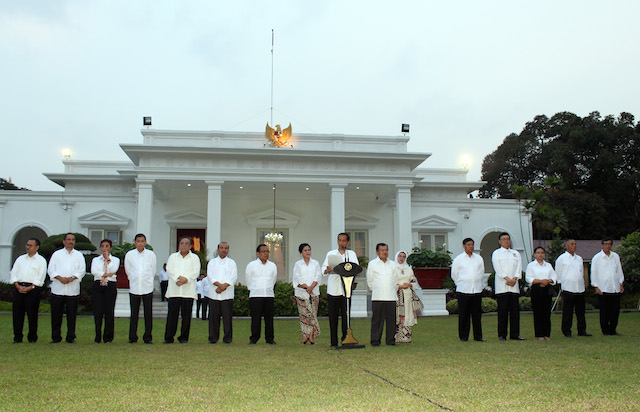
Three years ago, Jokowi was elected as Indonesia’s President, which made him the first leader elected that is not part of the country’s political and military elite. Because of his reputation for consulting with the poor before making policy decisions, he became Indonesia’s hope to help build a prosperous and tolerant country. But, Jokowi became president at a time when Indonesia’s economy was struggling to overcome weak demand for its natural resources, the rise of the Islamic State (ISIS) inspired radical Sunni Muslims worldwide, and annual forest fires demonstrated the challenge of forest protection. It became more complicated because Prabowo threatened to maintain a coalition of political parties that would actively oppose the President’s political agenda. Jokowi’s first year as president was tough. But Jokowi began learning more and was able to overcome the challenges as time passed by. He achieved a lot after 2 years since Jokowi was elected as president, which made him a popular figure in Indonesia. In his first year, he struggled to communicate with the citizens of Indonesia. But now, he has YouTube videos that he makes with his son. He also made a new appointment for the chief of the national police, Tito Karnavian, which means that he is no longer taking orders of elites in his governing coalition. Other than that, he also released 12 economic reform packages aimed at easing investment into the country and doing away with troublesome and redundant regulations. One of the most important change in the government that Jokowi did is when he reshuffled his working cabinet several times.
These are the changes that Jokowi made towards his working cabinet throughout his years as president:
- Coordinating Minister of Political, Legal, and Security Affairs: Jokowi first chose Tedjo Edhy Purdijatno as the coordinating minister of political, legal, and security affairs. But he replaced him with Luhut Binsar Panjaitan, which he then replaced again with Wiranto.
- Coordinating Minister of Economic Affairs: Jokowi first chose Sofyan Djalil as the coordinating minister of economic affairs. But he replaced him with Darmin Nasution.
- Coordinating Minister of Maritime Affairs: Jokowi first chose Indroyono Susilo as the coordinating minister of maritime affairs. But he replaced him with Rizal Ramli, which he then replaced again with Luhut Binsar Pandjaitan.
- Minister of Finance: Jokowi first chose Bambang Brodjonegoro as the minister of finance. But he replaced him with Sri Mulyani Indrawati.
- Minister of Energy and Mineral Resources: Jokowi first chose Sudirman Said as the minister of energy and mineral resources. But he replaced him with Arcandra Tahar, which he then replaced again with Luhut Binsar Pandjaitan. Then, he replaced him again with Ignasius Jonan.
- Minister of Industry: Jokowi first chose Saleh Husin as the minister of industry. But he replaced him with Airlangga Hartarto.
- Minister of Trade: Jokowi first chose Rahmat Gobel as the minister of trade. But he replaced him with Thomas Lembong, which he then replaced again with Enggartiasto Lukita.
- Minister of Transportation: Jokowi first chose Ignasius Jonan as the minister of transportation. But he replaced him with Budi Karya Sumadi.
- Minister of Education and Culture: Jokowi first chose Anies Baswedan as the minister of education and culture. But he replaced him with Muhadjir Effendy.
- Minister of Land and Spatial Planning: Jokowi first chose Ferry Mursyidan Baldan as the minister of land and spatial planning. But he replaced him with Sofyan Djalil.
- Minister of Village, Disadvantaged Regions and Transmigration: Jokowi first chose Marwan Ja’far as the minister of village, disadvantaged regions and transmigration. But then he replaced him with Eko Putro Sandjojo.
- Minister of National Development Planning (Chairperson of National Development Planning Agency): Jokowi first chose Andrinof A. Chaniago as the minister of national development planning (chairperson of national development planning agency). But he replaced him with Sofyan Djalil, which he then replaced again with Bambang Brodjonegoro.
Joko Widodo had a few changes in the working cabinet throughout the years of his presidency because Indonesia have been facing unhealthy challenges. The government must solve the problem of poverty, must reduce the economic gap rich with the poor, and the gap between regions.


Comments
Post a Comment